
Parshas Toldos 5787The Staff of Truth
תשפ״ז♦Sefer Bereishis
The מידה of אמת, and a ברכה that arrives through מרמה♦the גר״א reads ערמה against ערמת הנחש♦a מטה that was נגנז and not אבד
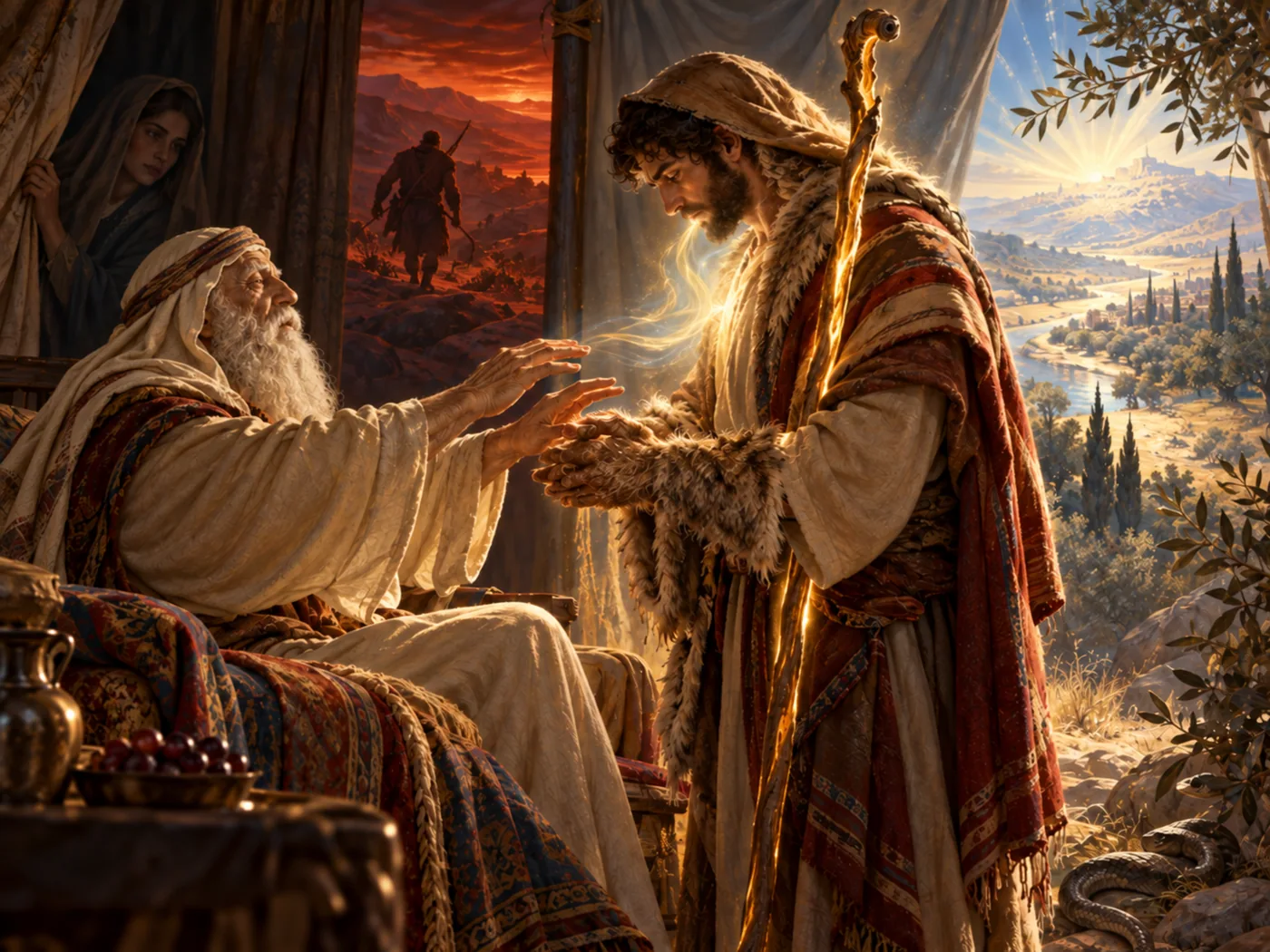
The defining quality of יעקב אבינו is אמת (truth).
תִּתֵּן אֱמֶת לְיַעֲקֹב חֶסֶד לְאַבְרָהָם אֲשֶׁר נִשְׁבַּעְתָּ לַאֲבֹתֵינוּ מִימֵי קֶדֶם (מיכה ז:כ)
Grant truth to יעקב and kindness to אברהם, as You swore to our fathers from days of old.
It is so basic that even a child knows it. The חסד of אברהם expresses kindness. The דין of יצחק expresses judgment. The אמת of יעקב expresses truth. And yet one of the defining stories in the life of יעקב is extraordinarily uncomfortable.
וַיָּבֹא אֶל־אָבִיו וַיֹּאמֶר אָבִי וַיֹּאמֶר הִנֶּנִּי מִי אַתָּה בְּנִי׃ וַיֹּאמֶר יַעֲקֹב אֶל־אָבִיו אָנֹכִי עֵשָׂו בְּכֹרֶךָ עָשִׂיתִי כַּאֲשֶׁר דִּבַּרְתָּ אֵלָי קוּם־נָא שְׁבָה וְאָכְלָה מִצֵּידִי בַּעֲבוּר תְּבָרֲכַנִּי נַפְשֶׁךָ (בראשית כז:יח–יט)
He came to his father and said, “My father.” He said, “Here I am. Who are you, my son?” יעקב said to his father, “I am עשו, your firstborn. I have done as you told me. Please arise, sit, and eat of my game, so that your soul may bless me.”
The scene is deliberate. As יעקב enters the room of his blind father, he is wearing the clothing that belongs to עשו instead of his own. His mother רבקה places goatskins on his hands and neck. The entire plan is constructed so that יצחק will believe that the son standing before him is someone else.
We can begin defending יעקב immediately. The explanation of רש״י divides the words carefully. We can point out that יעקב had already purchased the בכורה (firstborn right). We can say that רבקה had heard the words ורב יעבד צעיר before the children were born, telling her that the elder would serve the younger. All of that matters. But I am not sure that it answers the real question.
If the בכורה truly belonged to יעקב already, why not simply tell his father? Why the clothing? Why the goatskins? Why does the man whose defining מידה is אמת receive the defining ברכה of his life through מרמה (deception)?
There is a second question inside the first. When יעקב comes close, his father identifies the truth exactly: the voice, he says, is the voice of יעקב. Yet he blesses him anyway, because of the hands. The goatskins were not placed on his voice. They were placed on his hands, and the תורה ties the ברכה to them outright: he did not recognize him because his hands were like the hands of עשו, and he blessed him. Why should this ברכה follow the hands and not the voice?
✦
Two Nations
וַיֹּאמֶר ה׳ לָהּ שְׁנֵי גוֹיִם בְּבִטְנֵךְ וּשְׁנֵי לְאֻמִּים מִמֵּעַיִךְ יִפָּרֵדוּ וּלְאֹם מִלְאֹם יֶאֱמָץ וְרַב יַעֲבֹד צָעִיר (בראשית כה:כג)
ה׳ said to her: Two nations are in your womb, and two peoples will separate from within you. One nation will become stronger than the other nation, and the elder will serve the younger.
Their בחירה remains real. The responsibility for what עשו becomes is his own. But before either child has acted, the תורה tells us that these two brothers will become two different nations and two different paths. The struggle is not merely a family quarrel. It is a struggle over which דרך will carry the future.
✦
What Did עשו Sell?
When עשו returns from the שדה that day, he finds יעקב preparing lentils. The explanation of רש״י is that אברהם אבינו had died that day and the עדשים were being prepared as food for mourning. According to חז״ל there were also five עבירות that עשו committed that day: גילוי עריות through forbidden relations, שפיכות דמים through bloodshed, כפירה בעיקר through denying the fundamental belief in Hashem, כפירה בתחיית המתים through denying resurrection, and ביזוי הבכורה through despising the birthright. The גמרא finds each one in the language of the פסוקים themselves.1
The גר״א ז״ל sees something even older beneath the scene. He identifies עשו as corresponding to קין who was the first human בכור by birth. The מדרש describes the fight over the additional twin sister. The claim of קין is אני נוטלה שאני בכור in his own words: I will take her because I am the firstborn. In his hands, the בכורה becomes entitlement. The same themes of שדה and עריות together with שפיכות דמים and בכורה return in the conduct of עשו here.2
By contrast, יעקב sees the בכורה entirely differently. The words לפי שהעבודה בבכורות explain why רש״י says he wants it: the עבודה (service) belonged to the firstborn. His purpose is not simply to improve his inheritance. He wants to undertake that עבודה himself.
וַיֹּאמֶר עֵשָׂו הִנֵּה אָנֹכִי הוֹלֵךְ לָמוּת וְלָמָּה־זֶּה לִי בְּכֹרָה (בראשית כה:לב)
עשו said: Behold, I am going toward death. Of what use is this birthright to me?
The point is not that עשו is minutes away from starvation and יעקב is threatening to let him die. Rather, רש״י understands עשו as confronting the demands and dangers of עבודה and concluding that he does not want the burden. He wants the title of בכור for himself, but he does not want to carry what בכורה means.
And what does he receive in exchange? Not a kingdom. Not gold. Not a field. Only עדשים to eat. The very food being prepared because אברהם has died.
וַיֹּאמֶר עֵשָׂו אֶל־יַעֲקֹב הַלְעִיטֵנִי נָא מִן־הָאָדֹם הָאָדֹם הַזֶּה כִּי עָיֵף אָנֹכִי עַל־כֵּן קָרָא־שְׁמוֹ אֱדוֹם (בראשית כה:ל)
עשו said to יעקב: Pour into me, please, from this red, red substance, for I am exhausted. Therefore his name was called אדום.
Why should a person receive an eternal national name because of the color of his lunch? If someone eats a hamburger, we do not name an entire nation Hamburger!
The food is not the point. The choice is. When the responsibility of the בכורה confronts him, עשו chooses the immediate satisfaction of האדום האדום הזה instead. The physical thing in front of him becomes more valuable than the future that the בכורה carries. That choice reveals what אדום means.
✦
The שור and the חמור in a Mixture That Cannot Work
Here the גר״א ז״ל gives us another remarkable piece. He identifies עשו with קין and the שור together, while ישמעאל corresponds to הבל and the חמור in turn. Then he writes that these two forces must not join:
וְשֶׁלֹּא יִזְדַּוְּגוּ זֶה לָזֶה... לֹא תַחֲרֹשׁ בְּשׁוֹר וּבַחֲמוֹר יַחְדָּו. וְהֵן בְּעַצְמָן כִּלְאַיִם שֶׁל צֶמֶר וּפִשְׁתִּים.
They are not to join with one another: “You shall not plow with an ox and a donkey together.” And they themselves are the mixture of wool and linen.3
The first image is the prohibition of כלאי בהמה expressed in the words לא תחרוש בשור ובחמור יחדיו quoted above: an שור and חמור must not plow together. The second is the prohibition of שעטנז involving wool and linen. The גר״א ז״ל deliberately places both side by side. The forces represented by עשו and ישמעאל are not two מידות that can simply be blended into something balanced. Their union compounds the existing קלקול instead.
The גר״א ז״ל then explains that עשו attempted exactly that when he went to ישמעאל and married his daughter מחלת as a wife. He describes the attempted joining with the words להחריב את העולם and identifies סוד הקדושה and סוד יעקב as what is threatened. The joining of those two קליפות does not bring תפארת into being. It threatens the very סדר that יעקב represents.4
That point matters for everything that follows. The meaning of אמת is not the indiscriminate mixing of opposites. The quality of תפארת does not mean that every force belongs together. To act with אמת means knowing what can be joined, what must remain separate, and which כח can be taken and elevated only after it has been placed under the correct rule.
Yet יעקב will indeed take something from his brother. He will not become like עשו himself. He will take the ידים and place them beneath the guidance of the קול within him. That is not the joining of two corrupt identities. It is the recovery of a כח and its return to the proper סדר once again. That is what תיקון means.
✦
The Difference Between בכורה and ברכה
If עשו did not want to carry the בכורה himself, why does he care so desperately about the ברכה (blessing)?
הֲכִי קָרָא שְׁמוֹ יַעֲקֹב וַיַּעְקְבֵנִי זֶה פַעֲמַיִם אֶת־בְּכֹרָתִי לָקָח וְהִנֵּה עַתָּה לָקַח בִּרְכָתִי (בראשית כז:לו)
Was he therefore called יעקב, that he has supplanted me these two times? He took my birthright, and now he has taken my blessing.
Even עשו himself uses בכורתי and ברכתי as distinct terms. They are not identical.
The כלי יקר makes an astonishing observation. Only now does עשו realize how much the בכורה was worth. He thought its value was limited. He did not realize that the ברכות depended upon it. The words לא ידעתי שקבלת הברכות תלוי בבכורה express what the כלי יקר has him acknowledge: I did not know that receiving the blessings depended upon the birthright. He then gives בכר אותיות ברך as the רמז behind this connection. The letters of בכר and ברך are the same.5
Perhaps we can define the difference. The בכורה is the office. It identifies the one who bears responsibility for the בית as its representative: he carries its עבודה into practice, accepts its responsibility, and stands at its front. That is why בכור can mean more than chronological firstborn. Even דוד can be called בכור despite being a younger son of ישי rather than the eldest. Likewise, אפרים can be called בכורי even though מנשה was older.
אַף־אָנִי בְּכוֹר אֶתְּנֵהוּ עֶלְיוֹן לְמַלְכֵי־אָרֶץ (תהלים פט:כח)
I too will make him a firstborn, supreme over the kings of the earth.
כִּי־הָיִיתִי לְיִשְׂרָאֵל לְאָב וְאֶפְרַיִם בְּכֹרִי הוּא (ירמיהו לא:ח)
For I have become a Father to ישראל, and אפרים is My firstborn.
There is a formal בכורה based on birth, but there is also a deeper בכורה borne by the chosen representative who stands at the forefront of the בית as a whole. Along with עבודה come כבוד and the distinction of standing first. That is the part עשו liked. He still uses the words אני בנך בכורך עשו when presenting himself to his father. He wants to be the principal son.
The ברכה is different. It gives the bearer the potential to succeed in history through the שפע and כח bestowed upon him. In the thinking of עשו he could abandon the burden and still receive the payoff. The כלי יקר says he did not understand that the two were inseparable.
✦
The Mistake of עשו Is Still Ours
This is not merely an ancient mistake. It is a temptation we live with every day.
We want to receive the ברכה without carrying the בכורה ourselves. We want הצלחה without doing the עבודה it requires. We want the כבוד without the burden. We want to feel accomplished before we have become the person capable of carrying the accomplishment. We want the immediate געשמאק now.
That is the choice expressed by האדום האדום הזה in the story.
Notice that עשו does not even stop to name the food. Give me the red, red thing. The future can wait. The responsibility can wait. I am tired now. I am hungry now. Why do I need the בכורה now?
It is difficult not to recognize that instinct in modern life. We are surrounded by ways to experience the appearance of success before enduring the process that produces it. We want the feeling of knowing תורה without spending years in עמל התורה to acquire it. We want the respect of accomplishment without the hidden work. We want the געשמאק of עולם הזה without asking what that עולם הזה is for.
By contrast, יעקב chooses the opposite order. He wants the בכורה before any ברכה has come. There is no טל השמים yet. No promise of משמני הארץ has been given. No assurance of יעבדוך עמים has been offered. No כח is visible. He accepts the עבודה first. Only afterward does the ברכה follow. A future echo of נעשה and נשמע perhaps.
That may be one of the sharpest differences between the brothers. For עשו the געשמאק comes first, followed by the question of whether the עבודה is worth it. By accepting the עבודה first, יעקב trusts that whatever ברכה is meant to grow from it will come in its proper time.
The ברכה does not provide an alternative to doing the עבודה ourselves. It grows out of the עבודה we undertake.
✦
The Blessing of עולם הזה
וְיִתֶּן־לְךָ הָאֱלֹקים מִטַּל הַשָּׁמַיִם וּמִשְׁמַנֵּי הָאָרֶץ וְרֹב דָּגָן וְתִירֹשׁ׃ יַעַבְדוּךָ עַמִּים וְיִשְׁתַּחֲווּ לְךָ לְאֻמִּים הֱוֵה גְבִיר לְאַחֶיךָ וְיִשְׁתַּחֲווּ לְךָ בְּנֵי אִמֶּךָ אֹרֲרֶיךָ אָרוּר וּמְבָרֲכֶיךָ בָּרוּךְ (בראשית כז:כח–כט)
May האלקים give you from the dew of the heavens and from the richness of the earth, and an abundance of grain and wine. Peoples shall serve you and nations shall bow to you. Be master over your brothers, and the sons of your mother shall bow to you. Those who curse you shall be cursed, and those who bless you shall be blessed.
This is strikingly different from the ברכת אברהם that יצחק later gives יעקב openly, knowing exactly who stands before him.
וְאֵ־ל שַׁדַּי יְבָרֵךְ אֹתְךָ וְיַפְרְךָ וְיַרְבֶּךָ וְהָיִיתָ לִקְהַל עַמִּים׃ וְיִתֶּן־לְךָ אֶת־בִּרְכַּת אַבְרָהָם לְךָ וּלְזַרְעֲךָ אִתָּךְ לְרִשְׁתְּךָ אֶת־אֶרֶץ מְגֻרֶיךָ אֲשֶׁר־נָתַן אֱלֹקים לְאַבְרָהָם (בראשית כח:ג–ד)
May א־ל שדי bless you, make you fruitful and numerous, and you shall become an assembly of peoples. May He give you the blessing of אברהם, to you and to your descendants with you, so that you inherit the land of your dwelling which אלקים gave to אברהם.
The first ברכה overwhelmingly concerns the כח of עולם הזה in its material expressions: land, produce, authority, prosperity, and rule. The explanation of ספורנו explicitly places it בענייני העולם הזה and distinguishes it from the ברכת אברהם given later.6 This is the world עשו understands. And yet the ברכה given by יצחק establishes that this power must ultimately belong to the one who bears the בכורה as his responsibility.
That is why עשו can ask for another ברכה but cannot simply receive an identical one. His father יצחק can bless him, but he cannot make both brothers the גביר over one another. A blessing can be given to more than one child; the central hierarchy established by the first ברכה cannot be duplicated.
✦
Voice and Hands: קול יעקב and ידי עשו
וַיִּגַּשׁ יַעֲקֹב אֶל־יִצְחָק אָבִיו וַיְמֻשֵּׁהוּ וַיֹּאמֶר הַקֹּל קוֹל יַעֲקֹב וְהַיָּדַיִם יְדֵי עֵשָׂו (בראשית כז:כב)
יעקב approached יצחק his father, and he felt him and said: The voice is the voice of יעקב, but the hands are the hands of עשו.
The קול יעקב is רוחניות (spirituality). The ידי עשו are גשמיות (physicality).
The תיקון of יעקב does not eliminate the ידי עשו from the picture. For כלל ישראל to live in this world, the קול must have ידים that can act. Someone has to build. Someone has to work. Someone has to defend. Someone has to lead. The עולם הזה itself must ultimately be placed in the service of הקב״ה as well.
The problem with עשו is not that he has hands. The problem is that the hands have become an end in themselves. The קול no longer directs what the ידים do.
Therefore יעקב has to take the כח represented by ידי עשו and place it under the rule that קול יעקב establishes. That may be why the disguise is integral to receiving this ברכה in particular. What is being transferred is precisely the ברכה of גשמיות and the ability to wield worldly כח in practice. He must receive the ידים while remaining יעקב within.
And a כח that is placed in the hand will one day need something to hold.
✦
What אמת Really Means
We often reduce אמת to factual accuracy. Certainly אמת demands distance from falsehood.
מִדְּבַר־שֶׁקֶר תִּרְחָק (שמות כג:ז)
Distance yourself from a false matter.
But יעקב also embodies מידת תפארת (harmonious balance), in which חסד and דין find their proper relationship. His אמת is not merely the refusal to utter a false word. It is the ability to restore the correct סדר when the world has fallen out of balance.
At this point the opening question becomes sharper. We now understand why יעקב should carry the responsibility of בכורה himself. We understand why the ברכה of עולם הזה must ultimately belong to him. But none of that explains why מרמה had to be the means.
The first clue comes from the explanation of רש״י here. When יצחק says בא אחיך במרמה to his son, רש״י explains במרמה through the word בחכמה in his commentary. The תורה itself describes the act as מרמה while רש״י tells us to see a חכמה inside it. But what does that חכמה consist of? Why did it have to take precisely this form?
Here the גר״א ז״ל gives an astonishing answer. He writes that the taking of the ברכות deliberately employed ערמה as its means. Just as the נחש had deceived אדם הראשון at the beginning, יעקב answered עשו through that same כח and took back what belonged to him.
כי לקיחת הברכות ממנו בערמה היה, כמו שרימה הנחש לאדה״ר כן רימה יעקב לעשו ונטל את דיליה.
The taking of the blessings from him was through cunning: just as the serpent deceived אדם הראשון, so יעקב dealt with עשו and took what was his.7
This is the answer to the opening anomaly. The מרמה is not an unfortunate workaround that leaves אמת behind. It was through ערמת הנחש that the original distortion entered. The תיקון requires taking that same כח back from טומאה and placing it in the service of אמת once again. The נחש does not get permanent ownership of ערמה simply because he corrupted it first.
This also explains why the שור and חמור identified by the גר״א ז״ל matter so much. Not every mixture expresses תפארת properly. Some combinations constitute כלאים instead. True balance demands boundaries. The purpose of יעקב is neither to unite with עשו nor to become like him. He takes back a כח from the place where it has become corrupted and places it under the proper rule. The greatness of אמת is knowing what can be reclaimed, what must remain separate, and where every כח belongs.
The מי סוטה gives us a striking model. The שם ה׳ itself can be erased into the water in order to restore שלום between husband and wife. The teaching of חז״ל does not mean that קדושת השם suddenly matters less. The point is that the תורה can demand an extraordinary act in order to put the deeper סדר back in place. The meaning of אמת goes beyond superficial neatness. It means that the world is placed with proper balance.
✦
The תיקון of רבקה and חוה
But perhaps even here we have placed too much emphasis on the role יעקב plays. Who designs the entire plan? It is רבקה who directs it.
She hears. She decides. She chooses which גדיים to bring. She prepares the food. She takes the clothing that עשו wears. She places the skins on the hands and neck of יעקב himself. He is the reluctant participant.
וַתֹּאמֶר לוֹ אִמּוֹ עָלַי קִלְלָתְךָ בְּנִי אַךְ שְׁמַע בְּקֹלִי וְלֵךְ קַח־לִי (בראשית כז:יג)
His mother said to him: Your curse shall be upon me, my son. Only listen to my voice, and go take them for me.
The writings of the אריז״ל and מהרח״ו connect רבקה with the תיקון that חוה requires. The language itself is difficult to miss. The words כי שמעת לקול אשתך explain why אדם was punished: he listened to the voice of his wife. Here the words אך שמע בקולי express what רבקה tells her son: listen to me again. But this time the listening brings ברכה in place of the earlier קללה that resulted.8
וּלְאָדָם אָמַר כִּי־שָׁמַעְתָּ לְקוֹל אִשְׁתֶּךָ וַתֹּאכַל מִן־הָעֵץ אֲשֶׁר צִוִּיתִיךָ לֵאמֹר לֹא תֹאכַל מִמֶּנּוּ אֲרוּרָה הָאֲדָמָה בַּעֲבוּרֶךָ בְּעִצָּבוֹן תֹּאכֲלֶנָּה כֹּל יְמֵי חַיֶּיךָ (בראשית ג:יז)
To אדם He said: Because you listened to the voice of your wife and ate from the tree concerning which I commanded you, saying, “Do not eat from it,” cursed is the ground because of you; through pain shall you eat from it all the days of your life.
Suddenly the words עלי קללתך בני spoken by רבקה become much larger. The earlier listening had brought a קללה upon them. Now she takes responsibility for that קללה and directs the same human capacity toward receiving ברכה instead.
The גר״א ז״ל goes further. He identifies עשו with the נחש הקדמוני and describes יעקב as a דוגמא of אדם הראשון in this encounter. He says that the garments of אדם had reached the possession of עשו before רבקה took them and placed them on her younger son. The clothing is therefore not a random prop in the deception. It belongs to the same return of what the נחש had captured.9
✦
The Meaning of גם ברוך יהיה
וַיֶּחֱרַד יִצְחָק חֲרָדָה גְּדֹלָה עַד־מְאֹד וַיֹּאמֶר מִי־אֵפוֹא הוּא הַצָּד־צַיִד וַיָּבֵא לִי וָאֹכַל מִכֹּל בְּטֶרֶם תָּבוֹא וָאֲבָרְכֵהוּ גַּם־בָּרוּךְ יִהְיֶה (בראשית כז:לג)
יצחק trembled an exceedingly great trembling and said: Who, then, was the one who hunted game, brought it to me, and I ate of everything before you came? I blessed him; indeed, he shall remain blessed.
This moment is essential. If יצחק has simply been cheated, why does he affirm גם ברוך יהיה afterward? Why not withdraw the ברכה he has given? The explanation of רש״י addresses exactly this point with the words שלא תאמר אילולי שרימה יעקב לאביו לא נטל את הברכות in his commentary. We must not think that יעקב received the ברכות only because he deceived his father. His father subsequently confirms them מדעתו and gives his conscious assent.
The מרמה gets יעקב into the room, but the ברכה does not remain active merely because יעקב fooled a blind man. Once the truth emerges, יצחק consciously ratifies what happened. Then the words את בכרתי לקח reveal what עשו had previously done. According to רש״י the response עכשיו לבכור ברכתי expresses what יצחק now understands: I blessed the בכור after all.
The external order had been overturned, but the deeper order had been restored. His father יצחק does not undo it. The words גם ברוך יהיה confirm that it stands.
✦
The בארות and What It Means to Continue
וַיָּשָׁב יִצְחָק וַיַּחְפֹּר אֶת־בְּאֵרֹת הַמַּיִם אֲשֶׁר חָפְרוּ בִּימֵי אַבְרָהָם אָבִיו וַיְסַתְּמוּם פְּלִשְׁתִּים אַחֲרֵי מוֹת אַבְרָהָם וַיִּקְרָא לָהֶן שֵׁמוֹת כַּשֵּׁמֹת אֲשֶׁר־קָרָא לָהֶן אָבִיו (בראשית כו:יח)
יצחק returned and dug the wells of water which they had dug in the days of אברהם his father, which the פלשתים had stopped up after אברהם’s death, and he called them names like the names that his father had called them.
Why does the תורה care that יצחק calls the wells by the same names? Perhaps because true מסורה is not merely repetition. First אברהם dug. Then the באר was closed. Now יצחק had to dig again. After doing the עבודה himself, he reached the same water and saw it the same way his father had seen it.
All of this is contained in one פסוק:
עֲטֶרֶת זְקֵנִים בְּנֵי בָנִים וְתִפְאֶרֶת בָּנִים אֲבוֹתָם (משלי יז:ו)
Grandchildren are the crown of the elders, and the glory of children is their fathers.
The relationship runs in both directions. עטרת זקנים בני בנים — the greatness of the earlier generation becomes visible when the next generation genuinely carries forward what it received. And תפארת בנים אבותם — the תפארת of the child is his connection to the father from whom the דרך came.
But this does not mean that a בן simply copies his father. That is exactly what the בארות show. יצחק could not merely inherit open water. He had to dig again himself. Only after his own עבודה did he reach the same water and recognize it by the same names.
That is true מסורה.
A son does not become the continuation of his father merely by repeating his words. He receives a דרך, does his own עבודה, and through that עבודה reaches the אמת his father had reached. Precisely then he becomes the תפארת of his father, because his own achievement reveals the greatness of what his father transmitted.
That is the שמחה of a רבי when a תלמיד independently becomes מכוון to the פשט his teacher had reached. The תלמיד did not memorize an answer. He absorbed a דרך of learning. Once he learns to see properly, he can arrive at the same אמת himself. The greatest כבוד to a רבי is not to be merely quoted. It is to be reached again. That is the proof that he transmitted a way of seeing תורה, not merely information.
That is what true תולדות means. A בן is not a photocopy of his father. The אבות give us a סימן to follow; they do not give us the limit.
And that is where the בכורה itself begins to move. A title can be inherited. What the title means cannot. It has to be carried by someone willing to do the digging. עשו holds the formal בכורה but does not want its עבודה, while יעקב accepts the עבודה and becomes its deeper inheritor.
Perhaps it is only an observation, but יעקב is the third of the אבות, and לוי is the third son of יעקב. He transmits a דרך, and it is לוי who will become the שבט charged with preserving and teaching it. That is exactly where the עבודה will finally settle.
✦
When בכורה Moves Again
The תורה repeatedly shows us that biological firstness does not guarantee who will bear the deeper בכורה in practice. Although ראובן is the biological firstborn, יוסף receives the בכורה in his place. Although מנשה is the firstborn of יוסף by birth, יעקב crosses his hands and places the right hand on אפרים instead. When יוסף tries to correct him, the words ידעתי בני ידעתי are the answer his father gives. The old יעקב no longer needs goatskins. He can openly identify the chosen bearer.
Then the same pattern becomes national. Originally, the בכורים of כלל ישראל carry the עבודה as their responsibility. At the חטא העגל the nation corrupts עבודה at precisely the point where it should have expressed loyalty to הקב״ה through its service. Then משה issues his call:
מִי לַה׳ אֵלָי וַיֵּאָסְפוּ אֵלָיו כָּל־בְּנֵי לֵוִי (שמות לב:כו)
Whoever is for ה׳, come to me. And all the sons of לוי gathered to him.
וָאֶקַּח אֶת־הַלְוִיִּם תַּחַת כָּל־בְּכוֹר בִּבְנֵי יִשְׂרָאֵל (במדבר ח:יח)
I took the לויים in place of every firstborn among בני ישראל.
The deeper בכורה moves again. The one born first is not enough. The one capable of carrying the עבודה becomes its bearer.
And לוי is not chosen out of nowhere. The רמב״ם describes יעקב as setting לוי apart, appointing him as a head, and placing him in a ישיבה to teach דרך ה׳ and preserve the מצוות that אברהם had observed.10 Later משה gives לוי this ברכה for the future:
יוֹרוּ מִשְׁפָּטֶיךָ לְיַעֲקֹב וְתוֹרָתְךָ לְיִשְׂרָאֵל יָשִׂימוּ קְטוֹרָה בְּאַפֶּךָ וְכָלִיל עַל מִזְבְּחֶךָ (דברים לג:י)
They shall teach Your judgments to יעקב and Your תורה to ישראל.
The replacement of the בכורים by לוי is therefore not a side point. It continues the pattern established in תולדות on a national scale. The deepest בכורה settles on the one who will carry the עבודה it demands.
But if the deepest בכורה settles on לוי, how can יוסף be the בכור? Because the light of ישראל does not pass whole to one son. The שבטים take it together, and each expresses its own מידה. Some are more prominent than others: יוסף is the בכור, the מלכות belongs to יהודה, the כהונה and the teaching of the תורה to לוי, and יששכר has his own special relationship with the תורה. When יעקב blesses them, the תורה says so:
כָּל־אֵלֶּה שִׁבְטֵי יִשְׂרָאֵל שְׁנֵים עָשָׂר וְזֹאת אֲשֶׁר־דִּבֶּר לָהֶם אֲבִיהֶם וַיְבָרֶךְ אוֹתָם אִישׁ אֲשֶׁר כְּבִרְכָתוֹ בֵּרַךְ אֹתָם (בראשית מט:כח)
All these are the tribes of ישראל, twelve; and this is what their father spoke to them. He blessed them, each man according to his own blessing.
The פסוק in דברי הימים states the division plainly:
כִּי יְהוּדָה גָּבַר בְּאֶחָיו וּלְנָגִיד מִמֶּנּוּ וְהַבְּכֹרָה לְיוֹסֵף (דברי הימים א ה:ב)
For יהודה prevailed among his brothers, and the ruler came from him, but the birthright belonged to יוסף.
So there is no contradiction. Each שבט holds its own מידה of the light of ישראל, and together they are ישראל.
✦
The גר״א ז״ל and the Two גדיים
In his פירוש to חד גדיא the גר״א ז״ל opens an astonishing window into the scope of the ברכות that יצחק bestowed. He explains that all the טובה that כלל ישראל has received and will yet receive is rooted in those ברכות that יעקב received. The two גדיי עזים through which he received them are therefore not incidental.11
לֶךְ־נָא אֶל־הַצֹּאן וְקַח־לִי מִשָּׁם שְׁנֵי גְּדָיֵי עִזִּים טֹבִים וְאֶעֱשֶׂה אֹתָם מַטְעַמִּים לְאָבִיךָ כַּאֲשֶׁר אָהֵב (בראשית כז:ט)
Go now to the flock and take for me from there two good young goats, and I will prepare them as delicacies for your father, as he loves.
The teaching of חז״ל connects the two טובים with the two שעירים brought on יום הכיפורים each year. The explanation of רש״י also notes that one of the גדיים prepared by רבקה was intended as a קרבן פסח for the meal, so the פסח setting is already inside the story itself. In the explanation of the גר״א ז״ל these two גדיים are connected to the same struggle: one brings כפרה to the people, and the other addresses the קטרוג against them. The strange path by which יעקב received the ברכה is itself part of the historical structure.
Then the גר״א ז״ל moves forward. He writes that יעקב gave יוסף all the ברכות and adds גם הבכורה נתן לו to make the second transfer explicit. The two things remain distinct, but they travel together. The brothers then sell יוסף with the purpose expressed by כדי לבטל הברכות והבכורה. Their attempt to cancel the ברכה and בכורה sends יוסף to מצרים and eventually sends the entire family after him.12
And then the גר״א ז״ל suddenly brings the מטה into the account.
✦
When the ברכה Enters the Hand Through the מטה
Why does the גר״א ז״ל trace the ברכות from יצחק through יעקב and יוסף into the events of מכירת יוסף and the descent to מצרים before suddenly introducing the מטה that משה wields? If this is one מהלך throughout, the מטה cannot be a historical accident that simply happened next. This is where, I think, the entire structure begins to come home.
It is the same question we asked in the room of יצחק: why does the ברכה follow the hands? The hands that received it will need something to hold.
An extraordinary מסורה appears in the account of פרקי דרבי אליעזר below.13 The מטה created at בין השמשות first passes from אדם הראשון into the hands of חנוך as its next bearer. From there it passes to נח and then to שם in turn. It then reaches אברהם and passes through יצחק to יעקב as the inheritance continues. The account then states:
וְיַעֲקֹב הוֹרִיד אוֹתוֹ לְמִצְרַיִם וּמְסָרוֹ לְיוֹסֵף בְּנוֹ
יעקב brought it down to מצרים and gave it to his son יוסף.
According to this מסורה there are three inheritances that יוסף now holds.
בכורה
ברכה
מטה
The בכורה identifies the bearer. The ברכה invests that bearer with potential and the שפע that sustains it. The מטה is that authority made tangible: an actual physical inheritance through which כח can be wielded. This distinction is not stated by the גר״א ז״ל in these words. But perhaps it explains why the גר״א ז״ל needs the מטה at precisely this point.
The מטה is therefore more than a symbol. It is a real inherited object, and that is exactly why the symbol has such force. A staff directs. A staff leads. A staff acts. It is power in the hand. The ברכה is still potential. The מטה is the moment that potential can be wielded.
וְאֶת־הַמַּטֶּה הַזֶּה תִּקַּח בְּיָדֶךָ אֲשֶׁר תַּעֲשֶׂה־בּוֹ אֶת־הָאֹתֹת (שמות ד:יז)
Take this staff in your hand, with which you shall perform the signs.
The ברכה is potential. The מטה is potential becoming action. The entire פרשה began with the relationship between קול יעקב and ידי עשו in that room. Now the word בידך places the כח literally in the hand that serves קדושה through its actions. The same question that began in the room of יצחק has become history.
This is the Staff of Truth. Its meaning goes beyond wood representing אמת as a symbol. The מטה is כח restored to its proper בעלים and put back in order. The קול directs how the יד acts. The רוחניות governs the גשמיות beneath it. The אמת governs how authority is exercised. The גר״א ז״ל gives us the chain. The מטה brings that chain into the hand.
✦
When the מטה Becomes Public
The מטה is not entirely absent before משה appears. The words כי במקלי עברתי את הירדן הזה are spoken by יעקב himself. Another מדרש tradition identifies that מקל with the same מטה later seen in the hands of יהודה and then משה and אהרן as the account continues. It also appears with דוד and the kings who follow, and ultimately with מלך המשיח at the end.14
So the real question is not why the מטה is never mentioned before משה appears. The question is why it does not function openly as the national כח of כלל ישראל until he leads the nation.
The גר״א ז״ל answers this through the order of חד גדיא itself. Every link in the chain comes in answer to the one before it. The גדי is the ברכה with the בכורה. The שונרא is the קנאה of the שבטים, which tried to consume it once יעקב gave it to יוסף. The כלבא is פרעה, and the שעבוד that the sale of יוסף set in motion. Only then does the חוטרא come: the מטה of משה that struck פרעה. The מטה enters the chain at the moment the chain requires it, when the ברכה has been swallowed and a כלב stands over כלל ישראל. From then on, the גר״א ז״ל writes, every טובה that כלל ישראל had until the חורבן of the first בית came from the כח of the מטה, until the נורא burned it.
Before משה appears, the inheritance remains within a family. First אברהם builds a בית of his own. Then יצחק continues what his father began. Through יעקב that בית becomes the family from which כלל ישראל will grow. In one מסורה it is יוסף who carries the מטה into מצרים as its bearer; in another, יהודה receives it along the way. These are different physical chains and we should not collapse them into one. But both preserve the same striking idea: the מטה is inherited authority, present before it becomes national.
What changes with משה is how the מטה is revealed. Its existence is not new; its גילוי takes a new form. The private or familial inheritance becomes public historical power.
Then מצרים happens. The family of יעקב becomes עם בני ישראל in its national form. For the first time, כלל ישראל emerges as a nation. At precisely that moment the inherited כח appears openly on behalf of the כלל as a whole.
And the מטה appears.
Now פרעה is struck. The power of מצרים is overturned. The ים splits. The descendants of יעקב leave as a people. A כח that had existed within the family becomes visible national power.
This is the opposite of the demand עשו makes for immediate געשמאק in the present. Real כח can be carried and built for generations before it becomes visible on the surface. The question עשו asks is simple: Where is the payoff now? By contrast, יעקב accepts the עבודה before seeing its results. Only when כלל ישראל emerges does the מטה become an instrument through which national כח is publicly exercised.
✦
How משה and אהרן Reveal the Inheritance of לוי
Once the inheritance becomes national, it is בני לוי who reveal it. The תורה defines the relationship between משה and אהרן from the first moment of their שליחות:
וְדִבֶּר־הוּא לְךָ אֶל־הָעָם וְהָיָה הוּא יִהְיֶה־לְּךָ לְפֶה וְאַתָּה תִּהְיֶה־לּוֹ לֵאלֹקִים (שמות ד:טז)
He shall speak for you to the people. He shall be a mouth for you, and you shall be to him as a master.
The roles are explicit. משה is the connection: he is the one to whom ה׳ speaks פה אל פה, and he stands over the דיבור as its master. אהרן is the דיבור: he is the פה through which that connection reaches the people.
That is why the מטה belongs to משה. He is the action as well as the connection, and the מטה is the כח in his hand. Even when אהרן stretches it out in the first מכות, he acts on behalf of משה and with him. The command comes to משה first, אמר אל אהרן, and only then does אהרן stretch out his hand. That is the order in each of those מכות.
The גמרא teaches that three gifts sustained the nation in the מדבר: the באר through the זכות of מרים, the ענן through the זכות of אהרן, and the מן through the זכות of משה15. In the same פירוש to חד גדיא the גר״א ז״ל explicitly includes the ענני הכבוד among the later טובות connected with the כח whose history he is tracing through the מטה and beyond.16
Perhaps the gifts follow the roles. The מן comes through משה: sustenance that descends directly from above each day, through the one who stands connected to its source. The ענן comes through אהרן, and in the תורה the ענן is the place of דיבור:
בְּעַמּוּד עָנָן יְדַבֵּר אֲלֵיהֶם שָׁמְרוּ עֵדֹתָיו וְחֹק נָתַן לָמוֹ (תהלים צט:ז)
In a pillar of cloud He would speak to them; they kept His testimonies and the statute He gave them.
The previous פסוק names who stood there: משה ואהרן בכהניו. The ענן is where ה׳ speaks, and it accompanies the nation in the זכות of the one who is the פה.
Both roles belong to the portion of לוי. As משה stands before ה׳ on behalf of the nation. אהרן speaks to the nation and carries its עבודה in the כהונה. Both expressions emerge from לוי through his descendants.
There is an important chronological point here. Both משה and אהרן are בני לוי before the formal transfer of the עבודה from the בכורים following the עגל incident. That means this transfer does not suddenly invent the role לוי plays. It reveals and formalizes something already present.
The true בכור is not created by the title. The title eventually settles on the one already capable of carrying it.
We saw this with יעקב first. We saw it again with יוסף afterward. Now we see it with לוי in its own portion.
✦
The History of One ברכה
Now the progression of the גר״א ז״ל begins to look less like a list of events and more like the history of one כח unfolding.
The two גדיים lead to the ברכות being given. In יעקב the ברכה and בכורה come together. He then transfers both to יוסף as their next bearer. The brothers try to cancel them through מכירת יוסף and thereby cause the descent to מצרים that follows. The מטה then emerges and breaks the power that מצרים wields. Later משה passes the כח onward for יהושע to carry. The גר״א ז״ל continues the chain all the way into the struggle with אדום and the final גאולה that will follow.17
This is why יוסף is so central. He may be the first great historical realization of קול יעקב together with the ability to wield the power represented by ידי עשו in practice. He is a צדיק who rules over מצרים as its governor. He controls grain, wealth, land, and government while preserving his קדושה throughout. The ברכה of גשמיות is finally visible under the direction that רוחניות provides.
And that is why the movement of the גר״א ז״ל toward משיח בן יוסף is not incidental either. The struggle with אדום that began between יעקב and עשו continues through the role יוסף plays. The גר״א ז״ל has already identified him as the bearer of the ברכות and בכורה together, while פרקי דרבי אליעזר identifies him as a recipient of the מטה as well. The sources do not give one single physical genealogy, but the conceptual convergence around יוסף is impossible to ignore.
✦
The Hidden Staff
There is another remarkable מדרש about the מטה and its future. In במדבר רבה the discussion concerns מטה אהרן in particular.18 One opinion identifies it with the מטה that משה had held. The מדרש then says:
וְאוֹתוֹ הַמַּטֶּה הָיָה בְּיַד כָּל מֶלֶךְ וּמֶלֶךְ עַד שֶׁחָרַב בֵּית הַמִּקְדָּשׁ וְנִגְנַז, וְאוֹתוֹ הַמַּטֶּה עָתִיד לִהְיוֹת בְּיַד מֶלֶךְ הַמָּשִׁיחַ
That staff was in the hand of each king until the בית המקדש was destroyed and it was hidden; that staff is destined to be in the hand of מלך המשיח.
מַטֵּה עֻזְּךָ יִשְׁלַח ה׳ מִצִּיּוֹן רְדֵה בְּקֶרֶב אֹיְבֶיךָ (תהלים קי:ב)
The staff of your strength ה׳ will send from ציון; rule in the midst of your enemies.
The word אבד would mean that it was lost. That is not what the מדרש says. The word נגנז means that it was hidden.
That distinction changes everything.
The כח remains the possession of כלל ישראל even now. The visible מלכות is hidden, and therefore the מטה that manifests that מלכות is hidden with it.
The history of the מטה now mirrors the history of כלל ישראל itself: held within the family before the nation emerges, revealed as public and national כח when משה leads the people, hidden again when visible מלכות is lost, and destined to be revealed again when גאולה comes.
✦
The מנחה Sent to עשו
That is our position during the גלות אדום in which we live. Although יעקב already possesses the ברכה when he approaches his brother, he sends מנחה לעשו אחיו ahead of him. He uses עבדך יעקב to describe himself and addresses his brother as אדני in his words.
Although יעקב possesses the inner reality already, the visible balance of כח has not yet reached its final form.
In the account of תולדות we see יעקב wearing ידי עשו in order to receive the ברכה intended for him. In the account of וישלח he possesses that ברכה and nevertheless bows before his brother. We are still living inside that tension.
The קול is ours. The מטה is ours. But the visible manifestation of that כח is still hidden.
✦
At the Heel: עקבתא דמשיחא
וְאַחֲרֵי־כֵן יָצָא אָחִיו וְיָדוֹ אֹחֶזֶת בַּעֲקֵב עֵשָׂו וַיִּקְרָא שְׁמוֹ יַעֲקֹב (בראשית כה:כו)
Afterward his brother emerged, and his hand was grasping the heel of עשו, and his name was called יעקב.
The story of יעקב begins as his יד reaches toward the עקב of עשו at birth.
The יד is already there, and one מדרש even describes יעקב holding the מטה in his hand. But the national גילוי of that כח is still far away. In the account of תולדות he must wear ידי עשו to receive the ברכה his father gives. Later יוסף begins to show what it means for a צדיק to wield enormous physical power without becoming like עשו himself. When משה leads the nation, the מטה becomes the instrument through which כלל ישראל exercises public כח in history. Later that כח is hidden again.
And at the end, it returns.
Perhaps that is part of what עקבתא דמשיחא means. At the עקב עשו the hand of יעקב finally completes what began at birth. He does not become like עשו in doing so. He does not give the יד the place that the קול should occupy. He restores the correct relationship between them.
The קול directs the way the יד acts. The רוחניות governs the גשמיות beneath it. The אמת determines how כח is used.
✦
The Gift of תתן אמת ליעקב
We began this entire piece with תתן אמת ליעקב as our opening words. The word תתן may be easy to pass over, yet it tells us something essential: the אמת that יעקב receives is a gift from הקב״ה to him.
That may be part of the deepest contrast between the brothers. The אמת of יעקב is not something he seizes because he is brilliant enough to own it. His עבודה is to labor, to dig, to struggle, to wait, and to become a כלי capable of receiving what הקב״ה gives.
יָגַעְתִּי וּמָצָאתִי — תַּאֲמִין
If a person says, “I labored and I found,” believe him.19
The language of חז״ל joins יגעתי with ומצאתי rather than וקניתי as the result. Even after doing the יגיעה himself, a person receives the clarity as a מציאה he has found. He works for it, but when it comes, he knows that the result is larger than wages he manufactured for himself.
The same idea appears in what חז״ל tell us about משה רבינו as a learner. At first he would learn תורה and forget it, until finally ניתנה לו במתנה describes what happened: it was given to him as a gift. The words ויתן אל משה express that gift in the פסוק itself. Even the תורה that משה learns becomes his only after all his עבודה ends in a מתנה he receives.20
I had been working on this דרשה for weeks without feeling that the pieces had truly come together. Then, at two in the morning, the מהלך suddenly became clear. Perhaps that experience is itself part of what this פשט means. We work. We dig. We do the עבודה required of us. And then, when הקב״ה wills it, the אמת is given.
That should change how we think about the חידושי תורה we develop. We do not own the אמת that we discover, though it is called לקח טוב. We try to become כלים through which the רצון ה׳ can be fulfilled. A חידוש is not a trophy proving our brilliance or greatness. It is a מתנה and a responsibility.
The moment a person sees the חידוש primarily as evidence of his own greatness, he risks repeating the mistake עשו made: wanting the distinction of the בכור while forgetting the עבודה that makes a person worthy to carry it. In effect, עשו claims that the כבוד belongs to him because he holds the title of בכור by birth. The lesson יעקב teaches is the opposite. Do the עבודה required of you. Become the כלי that can receive. Then the words תתן אמת ליעקב can be fulfilled.
And perhaps that is also the final lesson the מטה teaches. Although כלל ישראל possesses the מטה by right, ownership is not entitlement. We must become the כלל ישראל capable of carrying it. We must become the כלי through which that hidden כח can once again be revealed.
✦
The Staff of Truth
We began with a contradiction. How can יעקב embody מידת האמת and yet receive his ברכה through deception? And why did that ברכה follow the hands rather than the voice?
Perhaps the answer is that אמת is larger than we thought.
The גר״א ז״ל gives us the answer. The נחש used ערמה to break the balance, and that same ערמה therefore had to be used to take the ברכות back. It is רבקה who directs that תיקון through her plan. Her son יעקב becomes neither like the נחש nor like עשו in carrying it out. He takes the כח back. The ידים that עשו possesses act without the direction of the קול within. The work of יעקב places those ידים beneath the guidance that the קול provides. Yet the same גר״א ז״ל teaches us that not every combination is holy: the שור and חמור cannot simply be joined. The wisdom of אמת is to know what must remain separate and what fallen כח must be returned to its proper place.
The ערמה explains the means. The hands explain the ברכה itself.
I cannot pass this opportunity to express a רמז I realized while developing this. The words ערום, meaning naked, are deeply related to ערמה, the cheating, deceipt and trickery. Perhaps we can say that the דעת that אדם וחוה tried to acieve was caused by an act of ערמה. Ultimately, they lacked understanding in just how ערום they actually were. It is the lack of ענוי of דעת that caused the בושה ultimately. It is this lacking and this ירידה that required a תיקון. A restoration of דעת and that happened through בגדי עשו, through covering יעקב. There is much more here, but this is not the place to further elaborate.
The formal בכור rejects the עבודה he should carry. In accepting it, יעקב becomes the deeper בכור in practice, and the ברכה gives that בכורה the potential to operate in history. But the light of ישראל does not pass whole to one son. The שבטים take it together, each expressing its own מידה, and it is יוסף who carries the בכורה and the ברכות. The גר״א ז״ל follows them through the descent to מצרים until the מטה appears. That is where the idea becomes physical. The בכורה identifies the bearer, the ברכה invests him with כח to act, and the מטה is that כח in the hand. Within לוי, the connection and the action come through משה, in whose hand the מטה is held, and the דיבור through אהרן, who carries the כהונה. Through יהודה it becomes מלכות: the מטה passes from king to king until it is hidden, and it is destined for the hand of מלך המשיח. The מטה is where the אמת of תולדות finally enters history.
And then the מטה is hidden.
But that מטה is ours.
We in כלל ישראל are its rightful bearers.
We are not waiting for someone to give us a new כח to wield. We are waiting to reveal our own מטה again.
But that itself carries the final warning drawn from the mistake עשו made. We cannot ask for the געשמאק of holding the מטה while rejecting the עבודה required to wield it. We cannot demand the ברכה while despising the בכורה that carries its responsibility. Such a כלי carries כבוד together with responsibility and an awesome distinction. We in כלל ישראל must mature to carry it.
That is the עבודה required of us: to know where אמת is. To know which lines must never be crossed and which boundaries must be crossed in order to restore what is true. To know what must never be mixed and which fallen כח must be reclaimed. To know when patience expresses אמת and when אמת demands that we act.
The mistake of עשו was wanting the געשמאק without doing the עבודה it requires. By contrast, יעקב accepted the עבודה before any ברכה had come. That remains our challenge. We live in a world that constantly offers האדום האדום הזה and asks us to trade away what takes years, generations, and sometimes an entire גלות to build.
May we be זוכה to choose the עבודה before us. May our תורה and מצוות together with our own עמלות make us worthy to become the כלל ישראל capable of carrying that מטה once again. May we earn back the כבוד and distinction of wielding such an awesome כלי in this world, with קול יעקב always directing what our ידים do.
May we be זוכה here in the days of עקבתא דמשיחא to do more than watch the מטה return; may we take hold of our מטה again. May our תורה and מצוות usher in משיח צדקנו and restore כבוד שמים to its proper place in this world, when עשו finally serves his brother, when רוחניות once again directs how גשמיות is used, and when the לבנה is restored to its fullness.
May we see במהרה בימינו that the ברכה was never lost, the מטה was only hidden, and כלל ישראל has become worthy to carry the Staff of Truth once again.
✦
Notes: מראי מקומות
The five עבירות of that day are in בבא בתרא טז ע״ב.
The claim of קין over the twin sister is in בראשית רבה כב, and the identification of עשו with קין is in the fourth פרק of ביאור הגר״א ז״ל לספרא דצניעותא.
The prohibition against joining the שור and the חמור, applied to עשו and ישמעאל, is in the fourth פרק of ביאור הגר״א ז״ל לספרא דצניעותא.
The marriage of עשו to מחלת as the attempted joining of the two קליפות is in ביאור הגר״א ז״ל לספרא דצניעותא.
The connection of בכר and ברך is from the כלי יקר on בראשית כז:לו.
The placing of the first ברכה in עולם הזה is from the ספורנו on בראשית כז:לה.
The ערמה of the נחש answered by the ערמה of יעקב is in the third פרק of ביאור הגר״א ז״ל לספרא דצניעותא.
The link between רבקה and the תיקון of חוה is in עץ הדעת טוב למהרח״ו on תולדות and in ספר הליקוטים להאריז״ל on the same פרשה.
The identification of עשו with the נחש הקדמוני, and the garments of אדם reaching עשו, are in ביאור הגר״א ז״ל לספרא דצניעותא.
The setting apart of לוי by יעקב is in the רמב״ם in הלכות עבודה זרה א:ג.
The scope of the ברכות and the meaning of the two גדיים are in the פירוש הגר״א ז״ל להגדה של פסח on חד גדיא.
The passing of the ברכות and the בכורה to יוסף, and the sale meant to cancel them, are in the same פירוש on חד גדיא.
The passing of the מטה from אדם הראשון down to יוסף is in the fortieth פרק of פרקי דרבי אליעזר.
The identification of the מקל of יעקב with the מטה is in ילקוט שמעוני on תהלים at רמז תתס״ט.
The three gifts of the מדבר and the זכות through which each came are in תענית ט ע״א.
The ענני הכבוד among the later טובות are in the same פירוש on חד גדיא.
The chain from the מטה through יהושע to the struggle with אדום, the final גאולה, and משיח בן יוסף is in the same פירוש on חד גדיא.
The hiding of the מטה and its return in the hand of מלך המשיח are in במדבר רבה יח:כג.
The teaching of יגעתי ומצאתי is in מגילה ו ע״ב.
The תורה given to משה as a מתנה is in נדרים לח ע״א.